
Real-World Scenarios
See how teams in your industry use Asrify to solve common challenges.
Managing Tax Season Workload
Your firm processes 200+ tax returns each season. Staff accountants work on multiple returns daily, and tracking time for each client is chaotic.
Create a project for each client in Asrify. Accountants track time as they work on each return. Reports show hours by client for accurate billing.
Clear visibility into which returns took the longest. Data informs pricing for next season.
Accounting Time Tracking
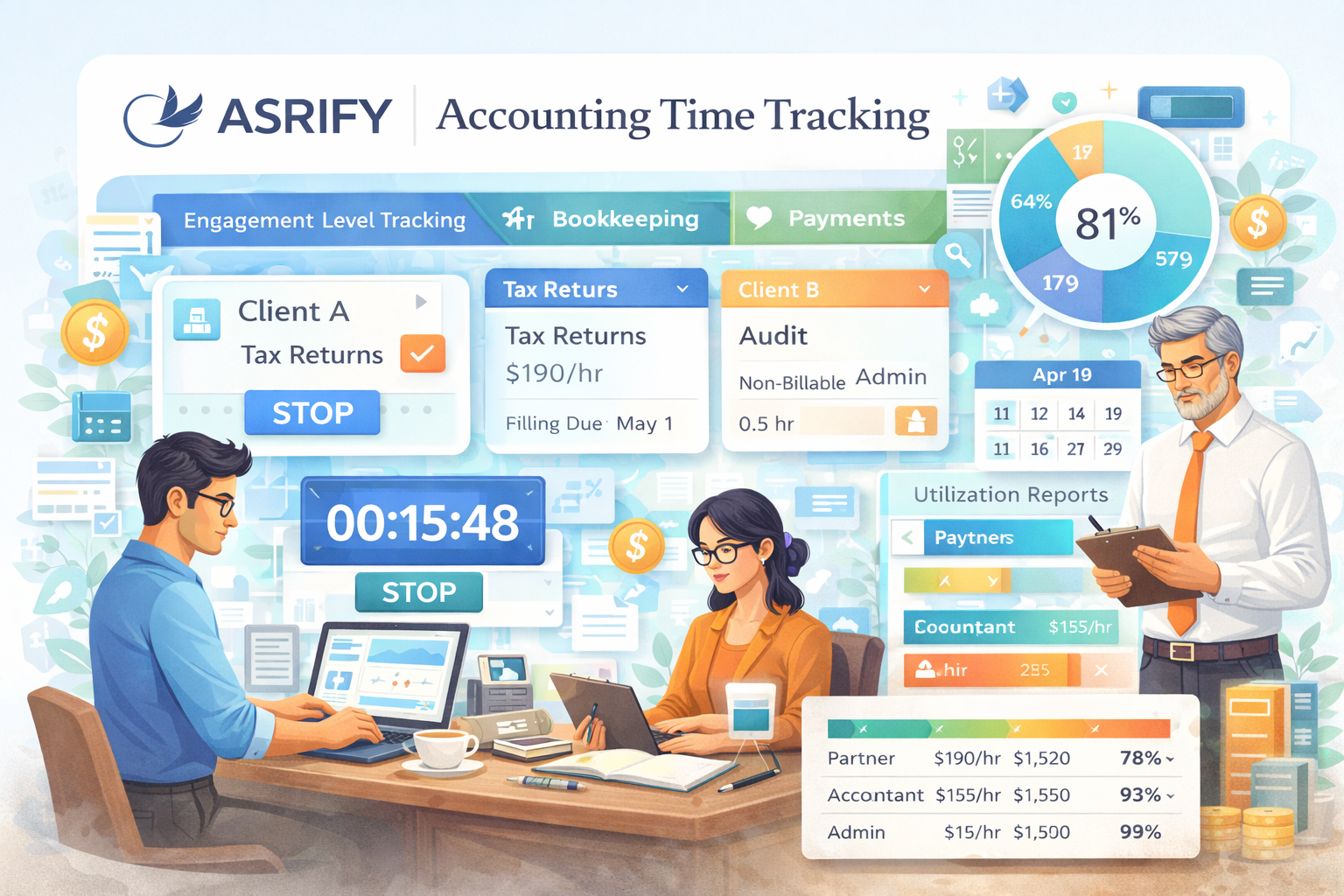
Track time on tax returns, audits, bookkeeping, and advisory services.
- Engagement-Level Tracking - Log time to specific client engagements.
- Billable vs. Non-Billable - Separate client work from admin time.
- Utilization Reports - See team utilization during busy season.
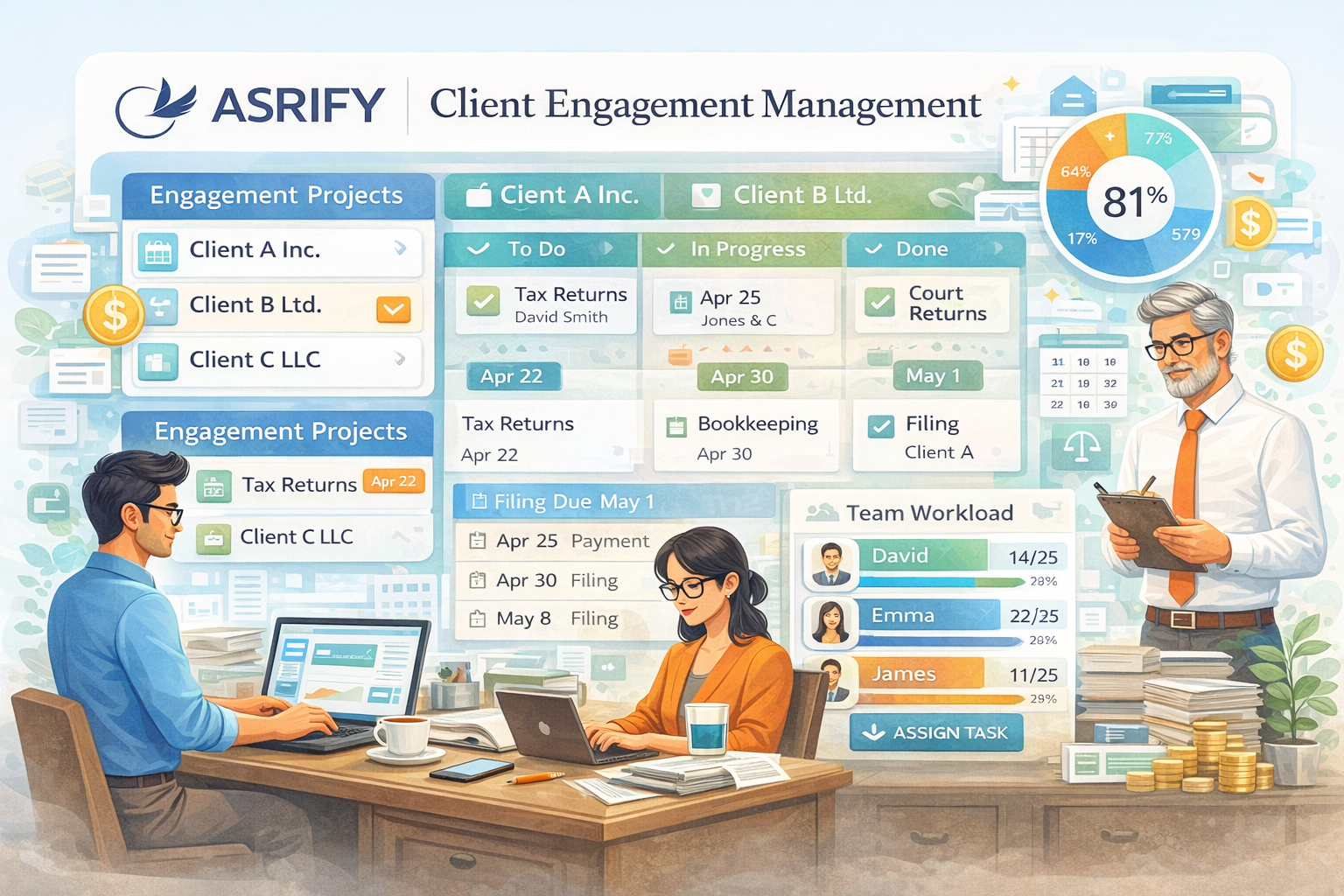
Client Engagement Management
Organize all client work. Track deadlines and team assignments.
- Engagement Projects - One project per client engagement.
- Deadline Tracking - Track tax deadlines and filing dates.
- Team Workload - Balance work across accountants.
Navigating the Accounting Practice Lifecycle
Accounting firms experience one of the most pronounced seasonality patterns of any professional service. Tax season compresses months of work into a twelve-week sprint where staff regularly log 60+ hour weeks. This intensity makes capacity planning critical—firms need to know exactly how many returns they can handle and when to bring on seasonal staff or turn away new clients.
The profession is evolving from compliance work toward advisory services. While tax preparation and audits remain core offerings, forward-thinking firms are building practices around financial planning, CFO services, and business consulting. These advisory engagements often carry higher margins but require different skills and different approaches to client relationships than traditional compliance work.
Client retention in accounting follows a different pattern than other professional services. Once a firm handles a client's taxes or books, switching costs are high and relationships tend to persist for years. This makes the lifetime value of each client substantial, which changes how firms should think about client acquisition costs and service quality investments.
Technology adoption has become a competitive differentiator in accounting. Firms using modern practice management and cloud-based collaboration tools can serve clients more efficiently and attract talent who expect to work with contemporary systems. The profession's traditional conservatism around technology is giving way to recognition that efficiency gains directly impact profitability and work-life balance.
Tax season is so much smoother now. We know exactly how much time each return takes.