
Real-World Scenarios
See how teams in your industry use Asrify to solve common challenges.
Managing Multiple Job Sites Simultaneously
Your contracting company manages 8 active job sites with different crews at each location. Tracking labor hours across sites is chaotic, and you struggle to know if jobs are on budget.
Create a project in Asrify for each job site. Crew members track time as they work at different locations. Reports show labor hours by job, helping you monitor budgets and identify which projects are over or under estimated hours.
Real-time visibility into labor allocation across all job sites. You catch budget overruns early and can adjust project plans. Historical data improves accuracy of future construction bids.
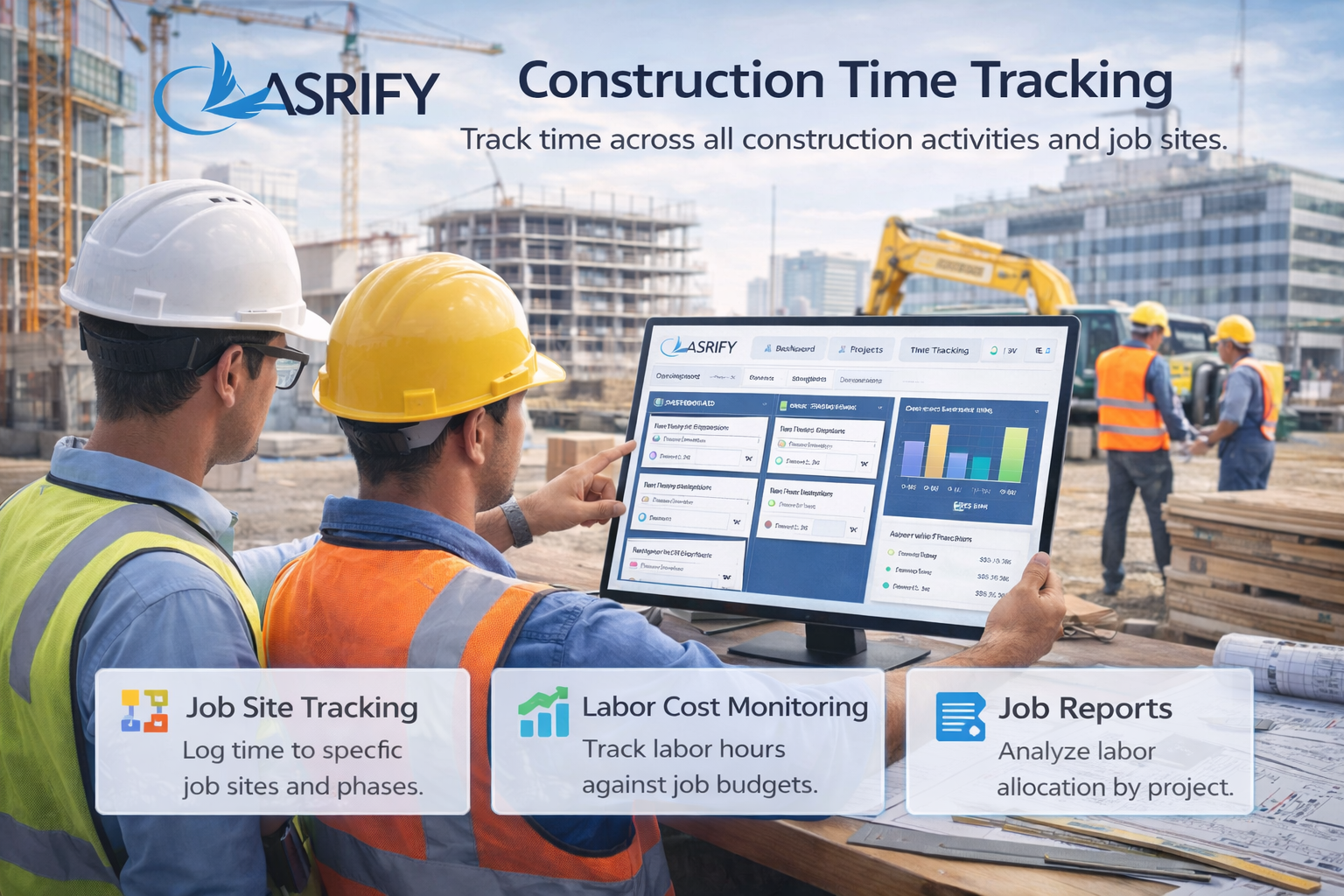
Construction Time Tracking
Track time across all construction activities and job sites.
- Job Site Tracking - Log time to specific job sites and phases.
- Labor Cost Monitoring - Track labor hours against job budgets.
- Job Reports - Analyze labor allocation by project.
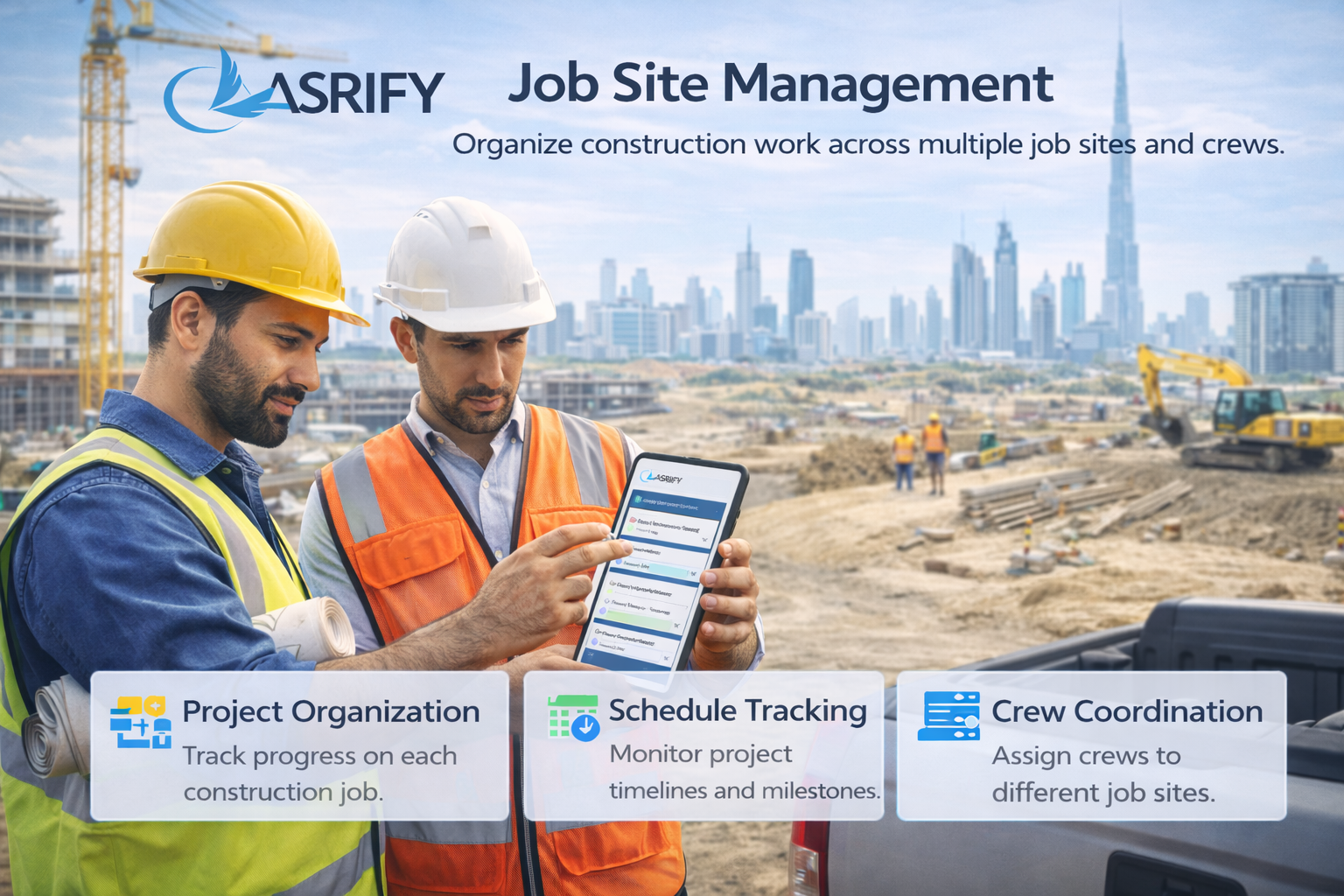
Job Site Management
Organize construction work across multiple job sites and crews.
- Project Organization - Track progress on each construction job.
- Schedule Tracking - Monitor project timelines and milestones.
- Crew Coordination - Assign crews to different job sites.
Construction Industry Economics
Construction operates on thin margins where small errors compound into significant losses. A residential project might target 10-15% gross margin, but material price increases, weather delays, or labor shortages can quickly consume that buffer. Commercial projects often work with even tighter margins. Successful contractors develop systems to catch budget overruns early, before they become irreversible.
Labor productivity varies dramatically based on job site conditions, crew composition, and supervision quality. The same task can take twice as long with an inexperienced crew or in challenging site conditions. Tracking actual labor hours against estimates builds the historical data that improves future bidding accuracy. Contractors who bid based on hope rather than data often discover they've won the jobs nobody else wanted.
Subcontractor coordination has become increasingly complex as projects involve more specialized trades. A general contractor might coordinate dozens of subs on a commercial project, each with their own schedules, crews, and concerns. The time spent managing this coordination—scheduling, inspecting, resolving conflicts—often exceeds the contractor's own direct work. Understanding this overhead is essential for accurate project pricing.
Cash flow management determines survival in construction. Progress payments, retainage, and the timing gap between incurring costs and receiving payment create constant pressure. Accurate job costing and progress tracking helps contractors anticipate cash needs and maintain the working capital that keeps projects moving forward.
We used to guess at job costs. Now we know exactly how many labor hours each project takes. Our bids are much more accurate.