
Real-World Scenarios
See how teams in your industry use Asrify to solve common challenges.
Managing a Brand Identity Project
A brand identity project spans logo design, color palette, typography, and brand guidelines. Multiple designers contribute, and revisions extend the timeline beyond the estimate.
Asrify lets you create a project with separate tasks for each deliverable. Designers track time against specific tasks, and you can see total hours at the project level.
You know exactly how long each phase took. Future brand projects can be estimated more accurately based on real data.
Handling Multiple Client Revisions
Clients request multiple revision rounds. Without tracking, you lose money on projects that go through more revisions than expected.
Create revision tasks and track time against each round. Set up milestones for initial concepts, first revision, second revision, and final delivery.
You can show clients exactly how much time revisions take. Data supports conversations about scope and additional fees.
Visual Workflow with Kanban
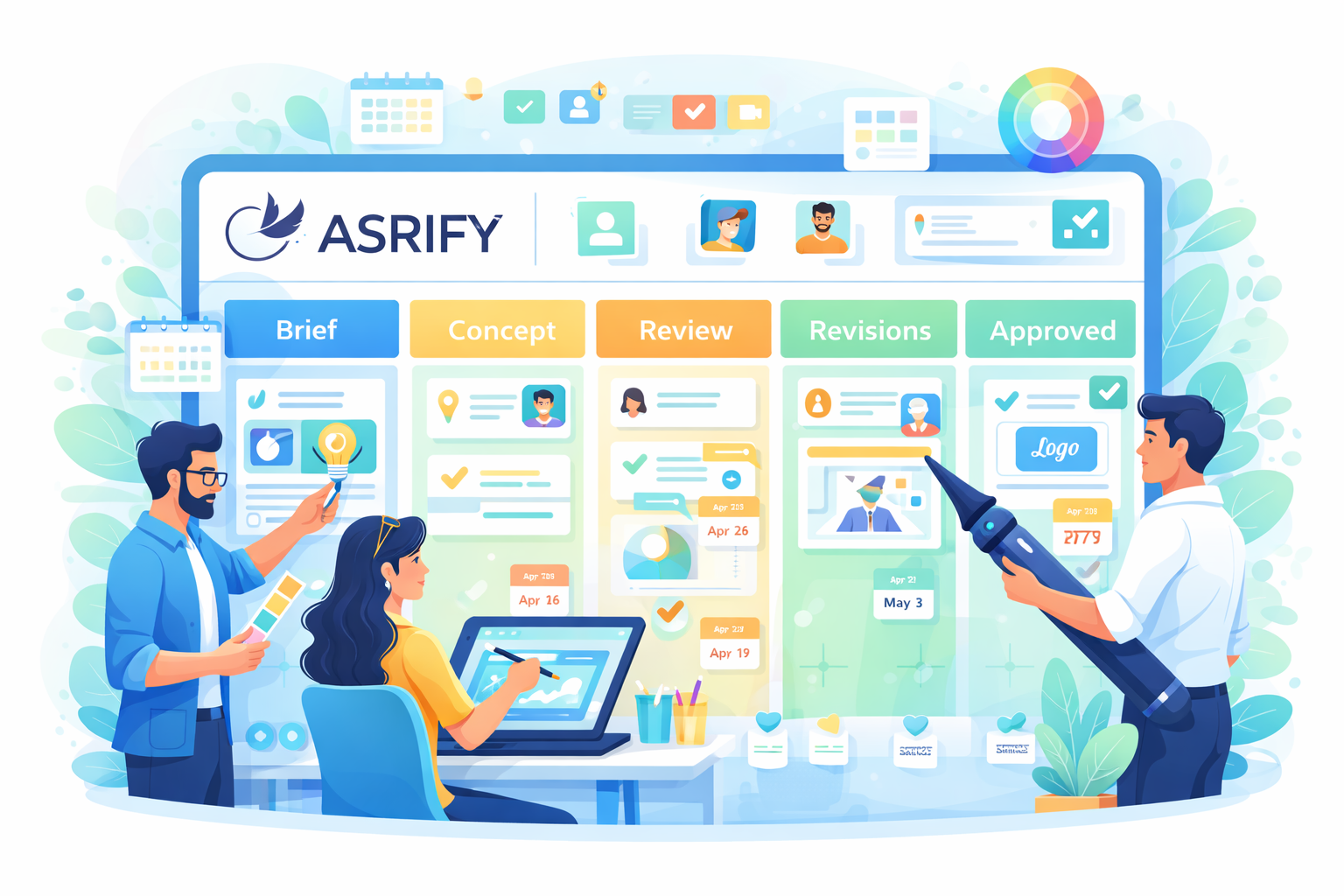
Move design tasks through stages from brief to delivery. See the status of all work at a glance.
- Custom Columns - Create stages that match your workflow: Brief, Concept, Review, Revisions, Approved.
- Team Overview - See who is working on what. Balance workload across the team.
- Due Dates - Attach deadlines to cards. Never miss a client delivery.
Time Tracking for Creatives
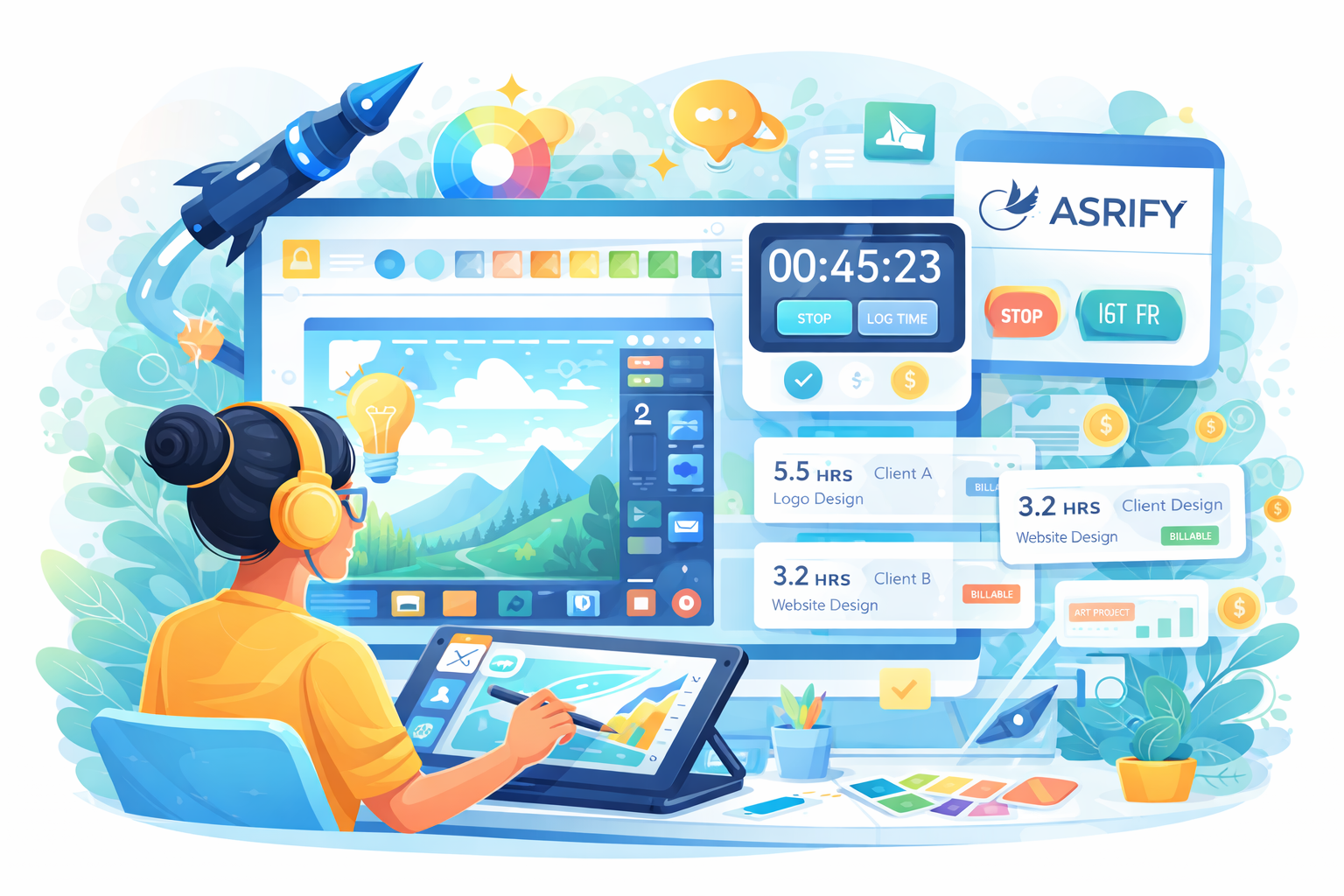
Track time while you design. Start a timer, focus on your work, stop when done.
- One-Click Timer - Start tracking instantly from any task.
- Bill Accurately - Know exactly how many hours to invoice.
- Time Reports - Generate reports by project, client, or team member.
The Design Agency Business Model
Design agencies face a distinctive challenge: their most valuable output—creative thinking—is often the hardest to quantify. While a developer can point to lines of code and a marketer can show campaign metrics, designers produce work that clients evaluate subjectively. This makes it crucial for design agencies to document their process and demonstrate the strategic thinking behind every visual decision.
The revision cycle is where many design projects become unprofitable. What starts as a straightforward brand identity project can balloon into dozens of iterations as stakeholders weigh in with conflicting feedback. Successful design agencies build revision limits into their contracts and track rounds carefully, but this requires having clear data on how time accumulates across each project phase.
Design systems and asset libraries have transformed how modern agencies work. Rather than starting from scratch with each project, teams build reusable components that speed up delivery and ensure consistency. Managing these shared resources requires coordination tools that let designers see what already exists and avoid duplicating effort.
Client coordination remains one of the biggest friction points in design work. Presenting concepts, gathering feedback, and managing approvals often happens across email, video calls, and review tools with no central record. Agencies that centralize project coordination find they spend less time chasing responses and more time on actual creative work.
We finally have accurate data on how long design projects really take. No more underestimating.