
Real-World Scenarios
See how teams in your industry use Asrify to solve common challenges.
Coordinating Work Across 5 Time Zones
Your remote team of 20 people spans from California to Eastern Europe. Coordinating work asynchronously is difficult, and you lack visibility into who is working on what across time zones.
Use Asrify to organize all work in projects. Team members track time and update task status as they work. Kanban boards show real-time progress. Task comments keep discussions contextual, reducing timezone confusion.
Complete visibility into work across all time zones. Team members know what others are working on without needing synchronous standup meetings. Asynchronous coordination works smoothly.
Asynchronous Collaboration
Stay coordinated without meetings. Built for distributed work.
- Task Visibility - Everyone sees what others are working on.
- Contextual Collaboration - Share work updates in context, asynchronously.
- Timezone Friendly - Track time in any timezone seamlessly.

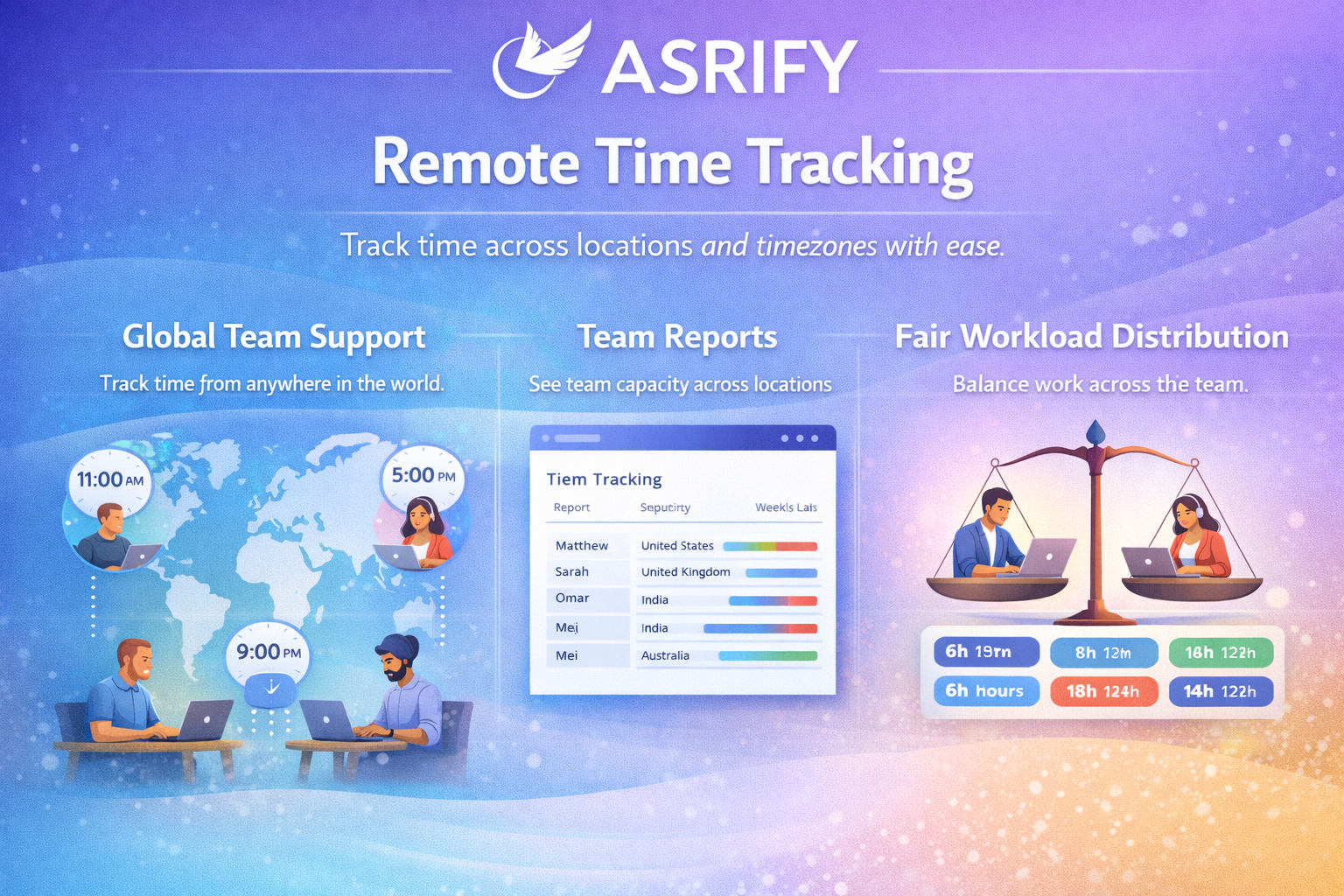
Remote Time Tracking
Track time across locations and timezones with ease.
- Global Team Support - Track time from anywhere in the world.
- Team Reports - See team capacity across locations.
- Fair Workload Distribution - Balance work across the team.
Managing Distributed Work
Remote work has transitioned from pandemic necessity to permanent reality for many organizations. Teams that once gathered in offices now span continents and time zones. This shift has unlocked access to global talent pools but also created new challenges around coordination, coordination, and culture that require intentional solutions rather than the organic interactions of shared physical space.
Asynchronous coordination is the foundation of effective remote work, but most teams never fully commit to it. They schedule meetings across time zones that force someone to attend at inconvenient hours. They expect rapid responses to updates regardless of when they're sent. True async requires documenting decisions, providing context in written coordination, and trusting team members to manage their own time effectively.
Visibility becomes crucial when you can't see who's at their desk. Remote managers often struggle with the question of whether their team is productive without the visual cues of office presence. The healthy answer is measuring outcomes rather than activity, but this requires clear expectations about deliverables and systems that make work visible without requiring constant status notes.
Remote work culture doesn't develop automatically—it requires intentional cultivation. Shared rituals, clear coordination norms, and genuine relationship-building replace the casual interactions that happen naturally in offices. Organizations that invest in remote culture retain talent; those that treat remote work as a cost-cutting measure find themselves with disengaged teams and high turnover.
Managing a team across 5 time zones was chaotic. Asrify gave us coordination without requiring everyone to be online at the same time.