
Real-World Scenarios
See how teams in your industry use Asrify to solve common challenges.
Managing Multiple Client Video Projects
Your production studio handles 15 concurrent client projects, each with different deliverables, timelines, and revision cycles. Tracking time and staying on budget is chaotic.
Create a project in Asrify for each client video. Break down tasks by phase: pre-production, shoot, edit, revisions. Track time against each phase to monitor budget vs. actual hours.
Clear visibility into which projects are over budget before they get out of hand. Time data informs more accurate estimates for future video production quotes.
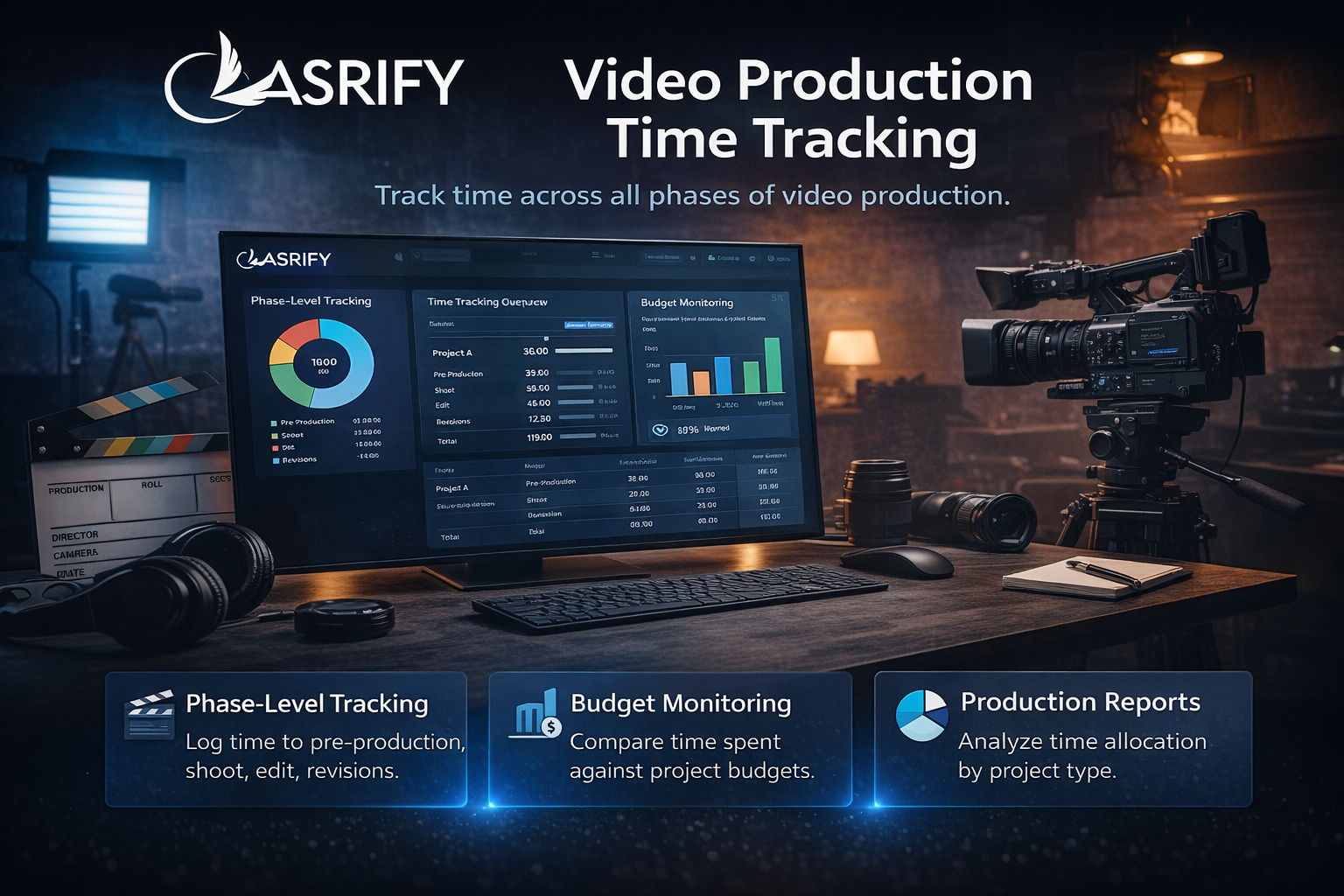
Video Production Time Tracking
Track time across all phases of video production.
- Phase-Level Tracking - Log time to pre-production, shoot, edit, revisions.
- Budget Monitoring - Compare time spent against project budgets.
- Production Reports - Analyze time allocation by project type.
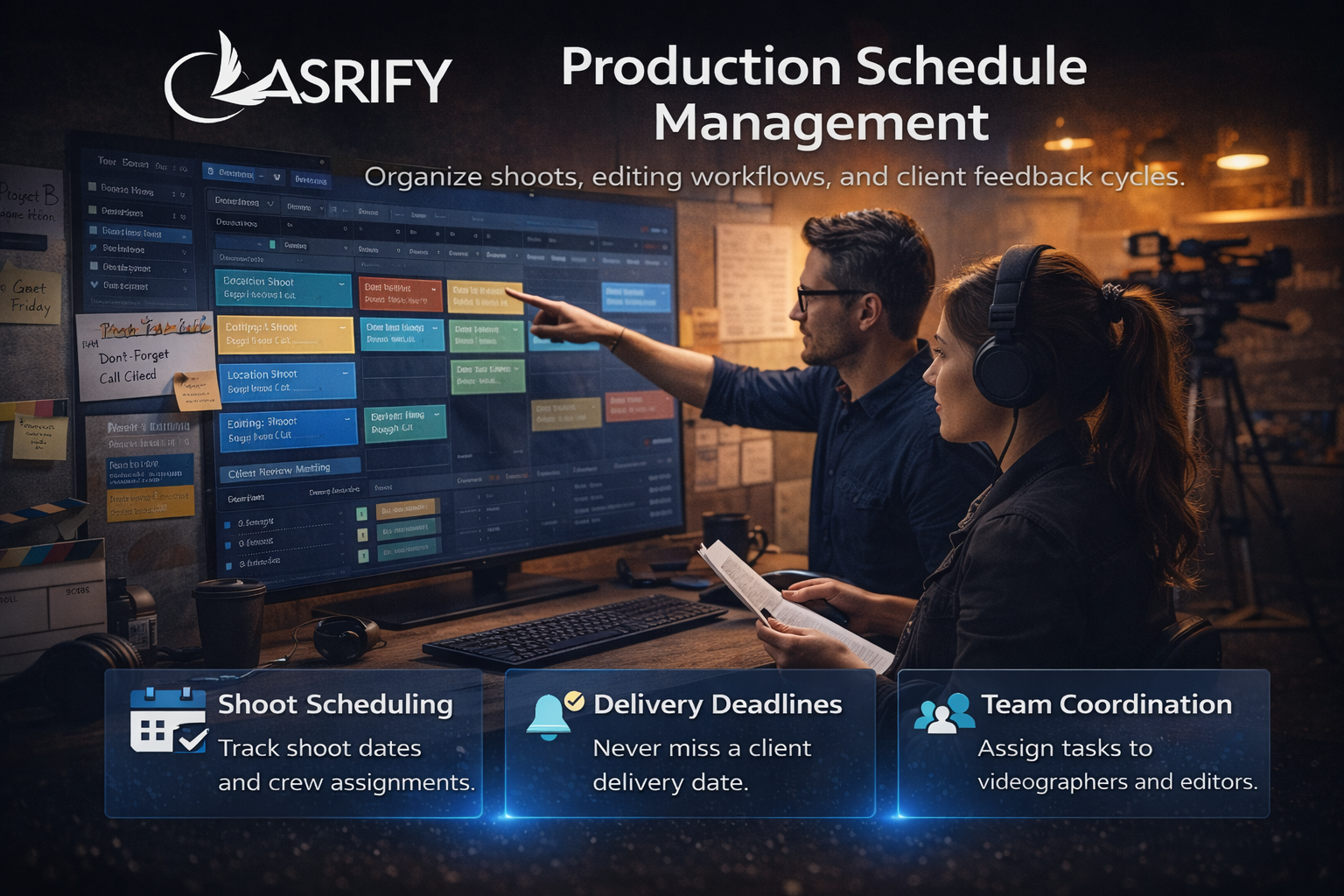
Production Schedule Management
Organize shoots, editing workflows, and client feedback cycles.
- Shoot Scheduling - Track shoot dates and crew assignments.
- Delivery Deadlines - Never miss a client delivery date.
- Team Coordination - Assign tasks to videographers and editors.
The Video Production Industry Today
Video production has evolved from a specialized service into an essential component of every organization's coordination strategy. The demand for video content continues to grow across corporate coordinations, marketing, social media, and entertainment. This growth creates opportunities but also increases competition from studios, freelancers, and in-house teams all vying for the same projects.
Production costs in video are notoriously difficult to estimate accurately. Pre-production planning, shoot days, editing, color grading, sound design, and revision cycles all contribute to final project costs. Productions that go over budget typically fail in pre-production—insufficient planning leads to longer shoots and more post-production corrections. Tracking time by production phase helps identify where estimates consistently fall short.
The revision process is where video projects most often exceed their budgets. Clients may struggle to visualize the final product from scripts and storyboards, leading to substantial changes once they see rough cuts. Establishing clear revision limits in contracts protects margins, but enforcing those limits requires documented data on time spent in each revision round.
Equipment and crew represent significant investments that sit idle between projects. Maximizing utilization of cameras, lighting, and editing suites while keeping skilled crew busy with billable work determines profitability. Production companies that can accurately forecast project timelines and resource needs make better decisions about equipment purchases and staff hires.
We finally know how long each phase of production actually takes. Our estimates are so much better now.