
Real-World Scenarios
See how teams in your industry use Asrify to solve common challenges.
Pre-Seed Startup Building MVP
Your founding team of 3 is building an MVP with limited runway. Every hour counts, but tracking time feels like unnecessary overhead.
Use Asrify to track time without adding process. Quick timers, minimal friction. See where time goes to make smart prioritization decisions.
You ship the MVP on time. Time data shows which features took longest, informing roadmap prioritization post-launch.
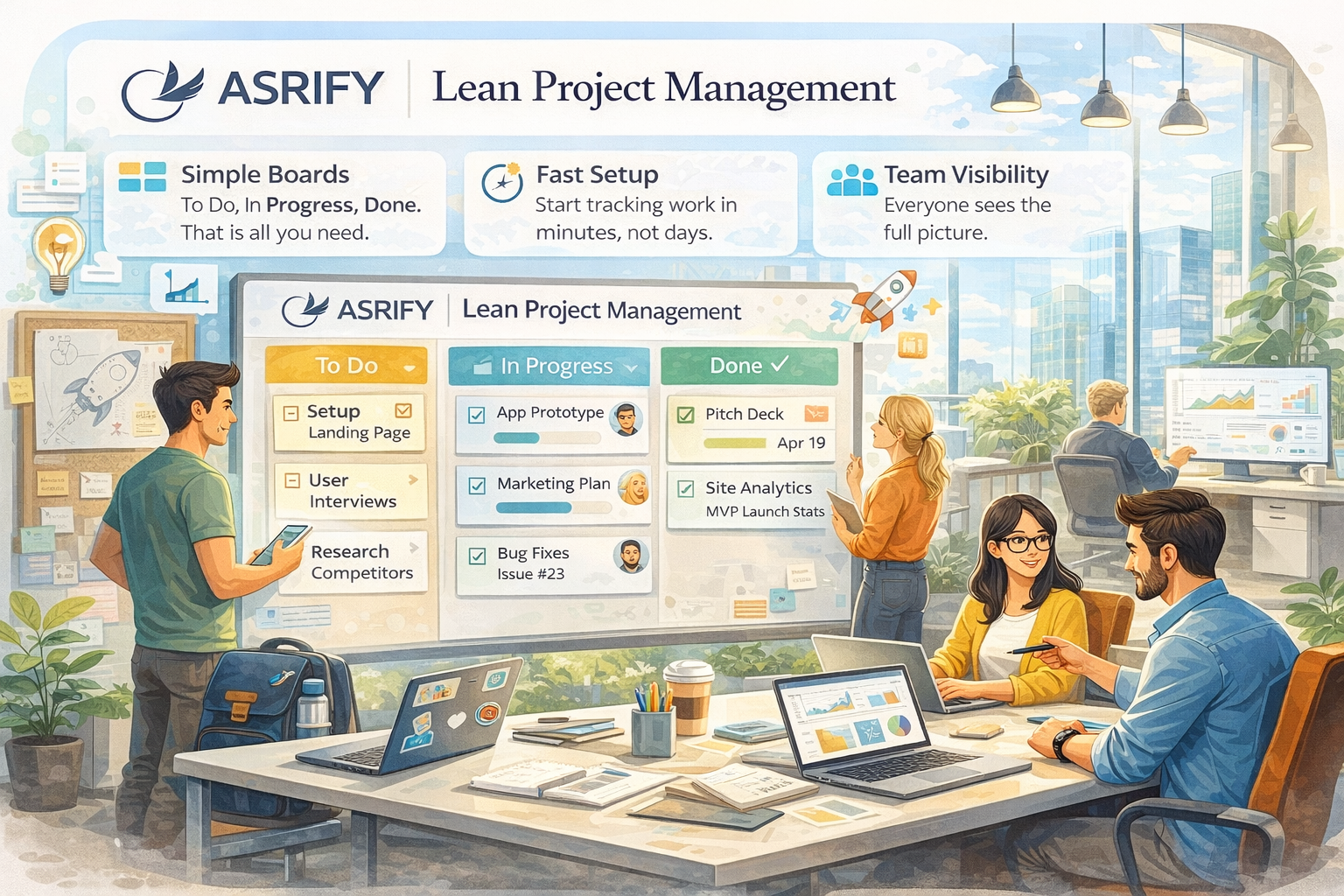
Lean Project Management
Organize work without heavyweight tools. Kanban boards for visual progress tracking.
- Simple Boards - To Do, In Progress, Done. That is all you need.
- Fast Setup - Start tracking work in minutes, not days.
- Team Visibility - Everyone sees the full picture.
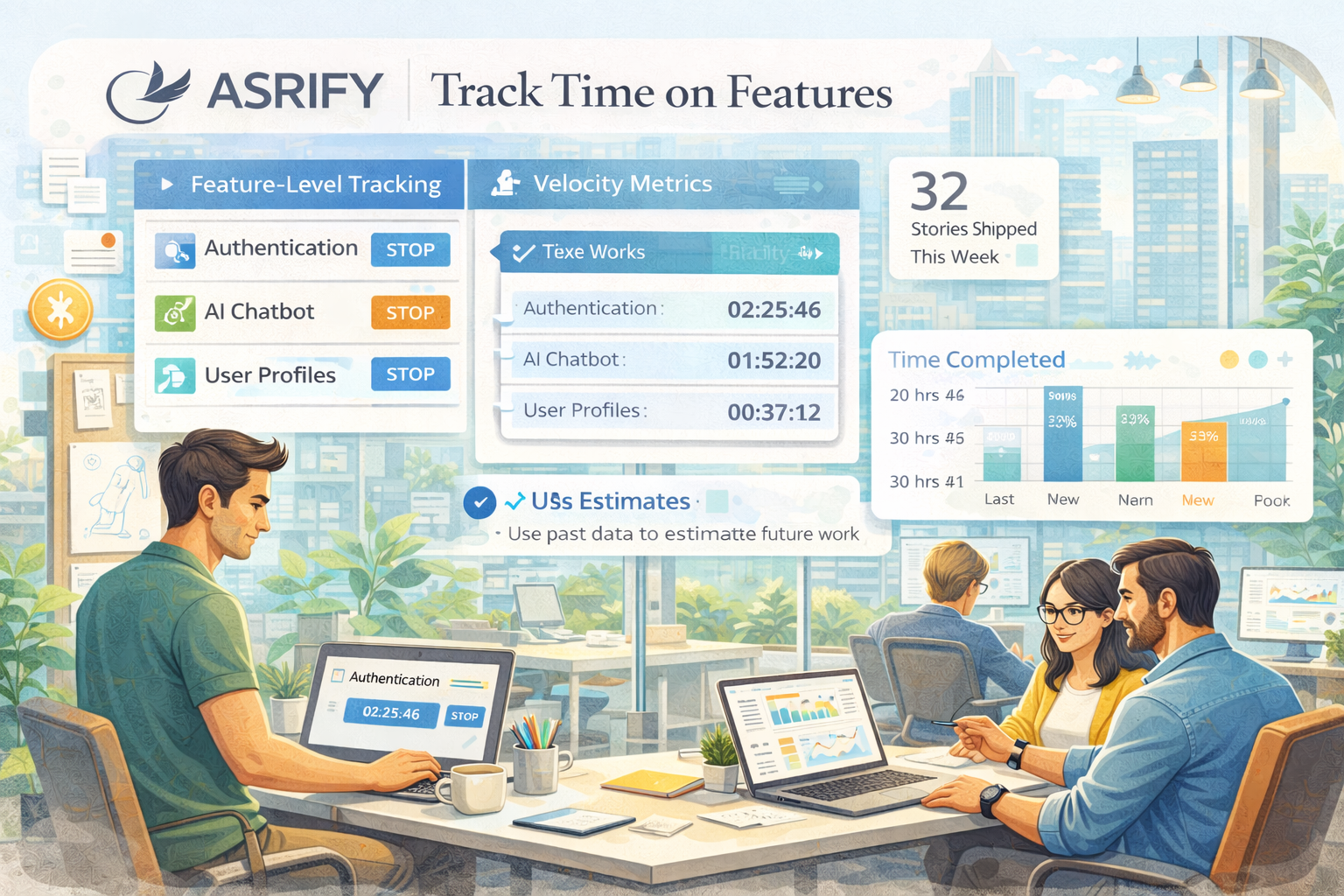
Track Time on Features
Understand how long building features really takes.
- Feature-Level Tracking - Log time against specific features.
- Velocity Metrics - See how much you ship per week.
- Better Estimates - Use past data to estimate future work.
Building in the Startup Environment
Startups operate under constraints that fundamentally shape how they need to work. Limited runway means every week matters. Small teams mean everyone wears multiple hats. Uncertainty about product-market fit means priorities shift frequently. These realities make heavy processes counterproductive—startups need lightweight systems that provide clarity without creating overhead.
The most successful early-stage teams develop a rhythm that balances building with learning. Shipping features quickly is essential, but shipping the wrong features wastes precious resources. Time tracking at the feature level helps founders understand their true development velocity and make informed decisions about scope. When you know a "small feature" typically takes two weeks, not two days, you plan differently.
Team coordination challenges emerge earlier than most founders expect. With just three or four people, coordination feels easy—everyone knows what everyone else is doing. But add a few more team members or start working with contractors, and suddenly things fall through cracks. Establishing lightweight coordination habits before they are desperately needed prevents the chaos that derails many promising companies.
Investor reporting becomes a regular obligation once funding arrives. Demonstrating progress requires data: features shipped, velocity trends, runway remaining. Teams that track their work from early days can show this history clearly. Those who don't find themselves reconstructing timelines from memory and collaboration logs—a painful exercise that yields questionable accuracy.
Asrify helped us stay organized as we scaled from 3 to 15 people. Simple but powerful.