
Real-World Scenarios
See how teams in your industry use Asrify to solve common challenges.
Managing Multiple Architectural Projects
Your firm handles 12 concurrent projects at different phases. Some are in schematic design, others in construction project details. Tracking time across phases and projects is chaotic.
Create a project in Asrify for each building. Break down tasks by phase: schematic design, design development, construction documents, construction administration. Track time against each phase and see exactly where hours go.
Clear visibility into which projects are over budget and which phases take longer than expected. Time data informs more accurate fee proposals for future architectural projects.
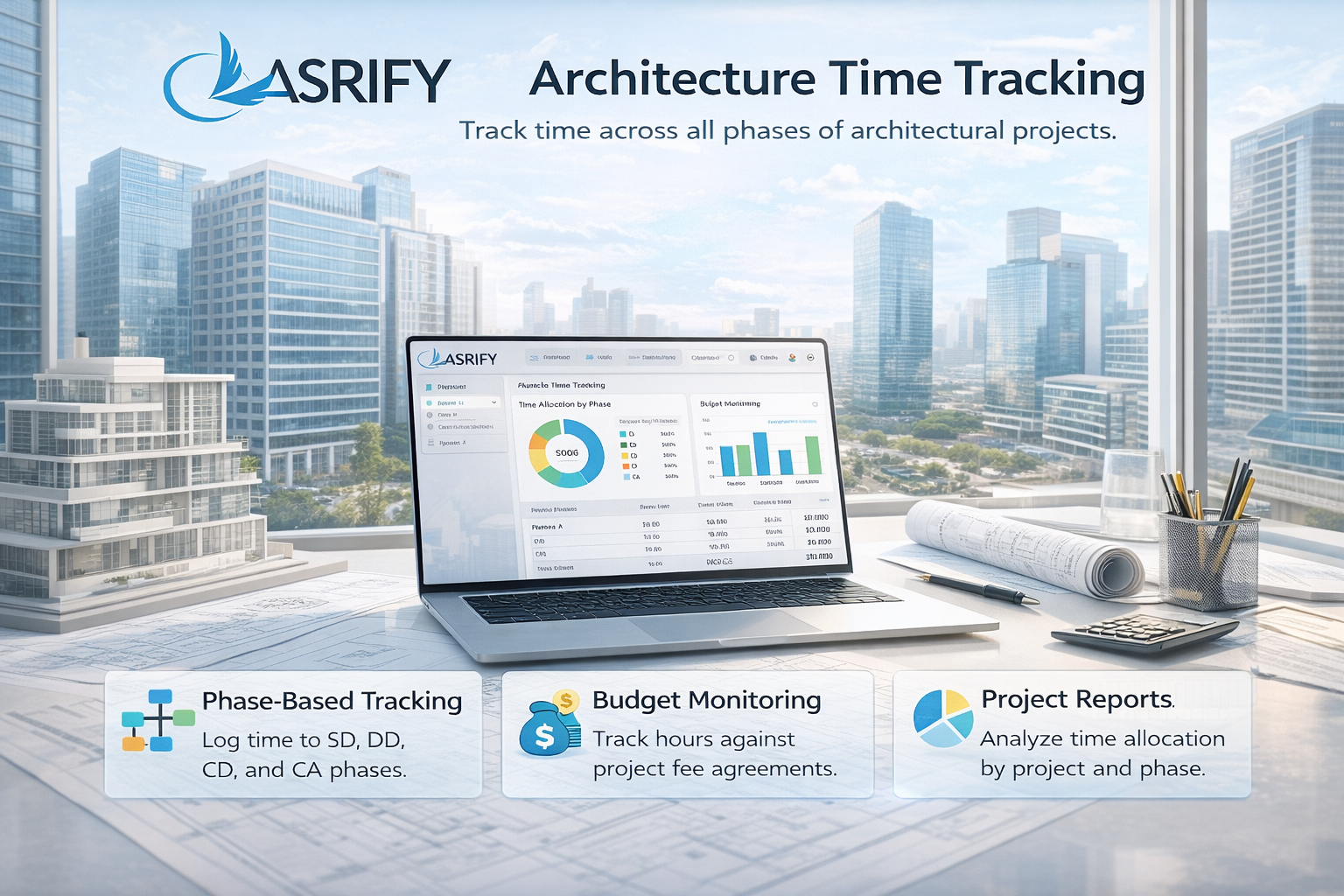
Architecture Time Tracking
Track time across all phases of architectural projects.
- Phase-Based Tracking - Log time to SD, DD, CD, and CA phases.
- Budget Monitoring - Track hours against project fee agreements.
- Project Reports - Analyze time allocation by project and phase.
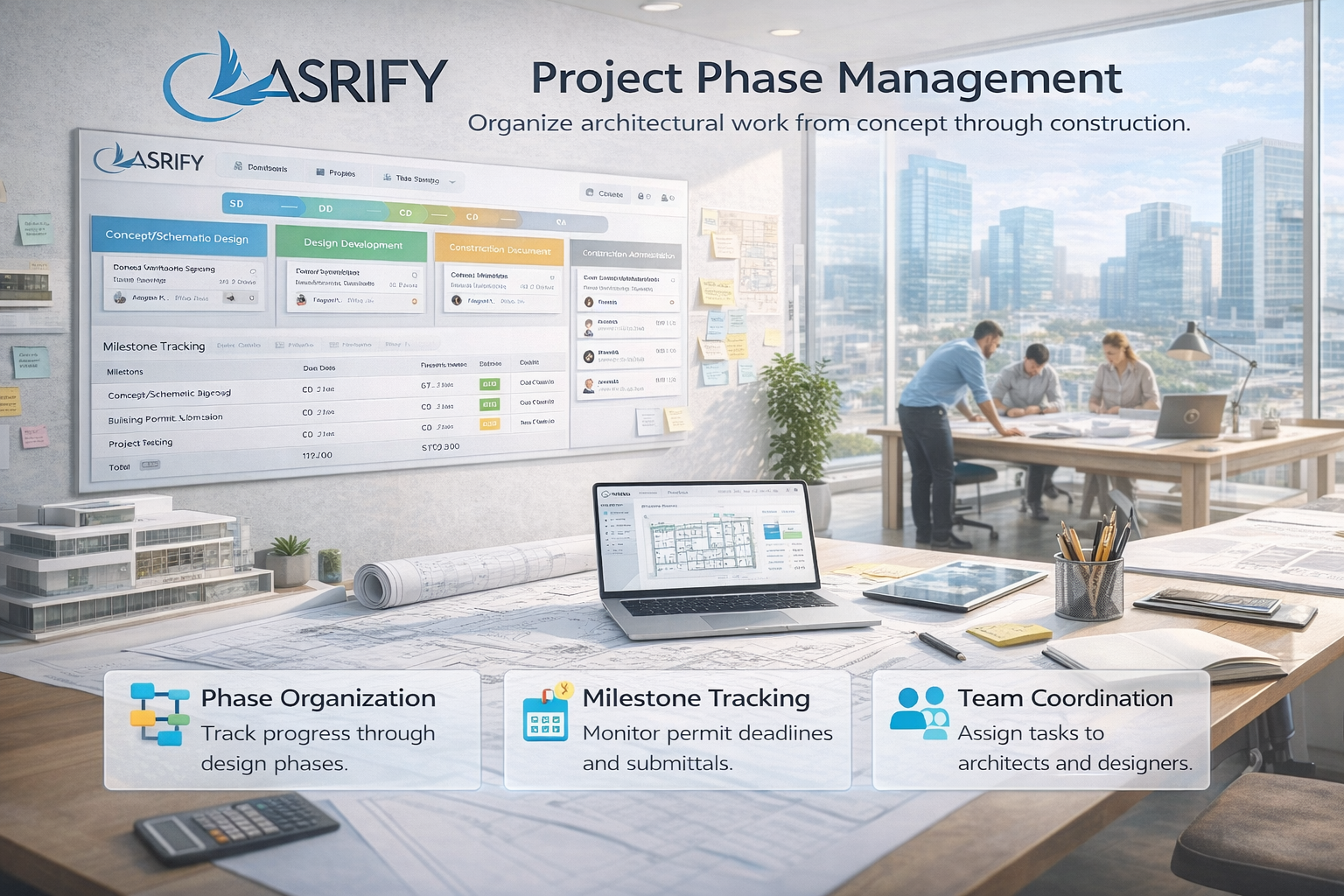
Project Phase Management
Organize architectural work from concept through construction.
- Phase Organization - Track progress through design phases.
- Milestone Tracking - Monitor permit deadlines and submittals.
- Team Coordination - Assign tasks to architects and designers.
Architecture Practice Management
Architecture firms operate on fee structures that were established decades ago but face modern challenges. The traditional percentage-of-construction-cost model assumes certain phase durations that often don't reflect reality. As projects become more complex and client expectations increase, many firms find that their standard fee calculations underestimate the true effort required.
Project phases in architecture have distinct characteristics that affect profitability differently. Schematic design is often where firms overspend, exploring multiple concepts to satisfy demanding clients. Design development refines the selected approach. Construction documents require meticulous technical work that's hard to compress. Construction administration extends over months or years with unpredictable intensity. Understanding time distribution across phases helps firms price future work more accurately.
Collaboration complexity grows with project scale and building type. Residential projects might involve just the architect and a structural engineer. Large commercial buildings require coordination with mechanical, electrical, plumbing, fire protection, landscape, interior design, and specialty consultants. Managing these relationships consumes significant time that firms often underestimate when scoping work.
The profession is increasingly shaped by sustainability requirements and building performance expectations. LEED certification, energy modeling, and life-cycle analysis add layers of work that weren't part of traditional practice. Firms that can demonstrate efficiency in delivering these services win projects from clients who see sustainability as essential rather than optional.
Asrify helped us understand which project phases consistently go over budget. Our proposals are much more accurate now.