
Real-World Scenarios
See how teams in your industry use Asrify to solve common challenges.
Managing Development Velocity Across Teams
Your software team of 12 engineers works on multiple features simultaneously. You lack visibility into development velocity and cannot accurately forecast when features will ship.
Use Asrify to track time on each feature and bug. Organize work in two-week sprints. Kanban boards show what is in progress. Reports show velocity per sprint, helping you forecast delivery dates.
Complete visibility into development progress. You can confidently commit to ship dates. Time data reveals which types of features take longest, informing roadmap planning.
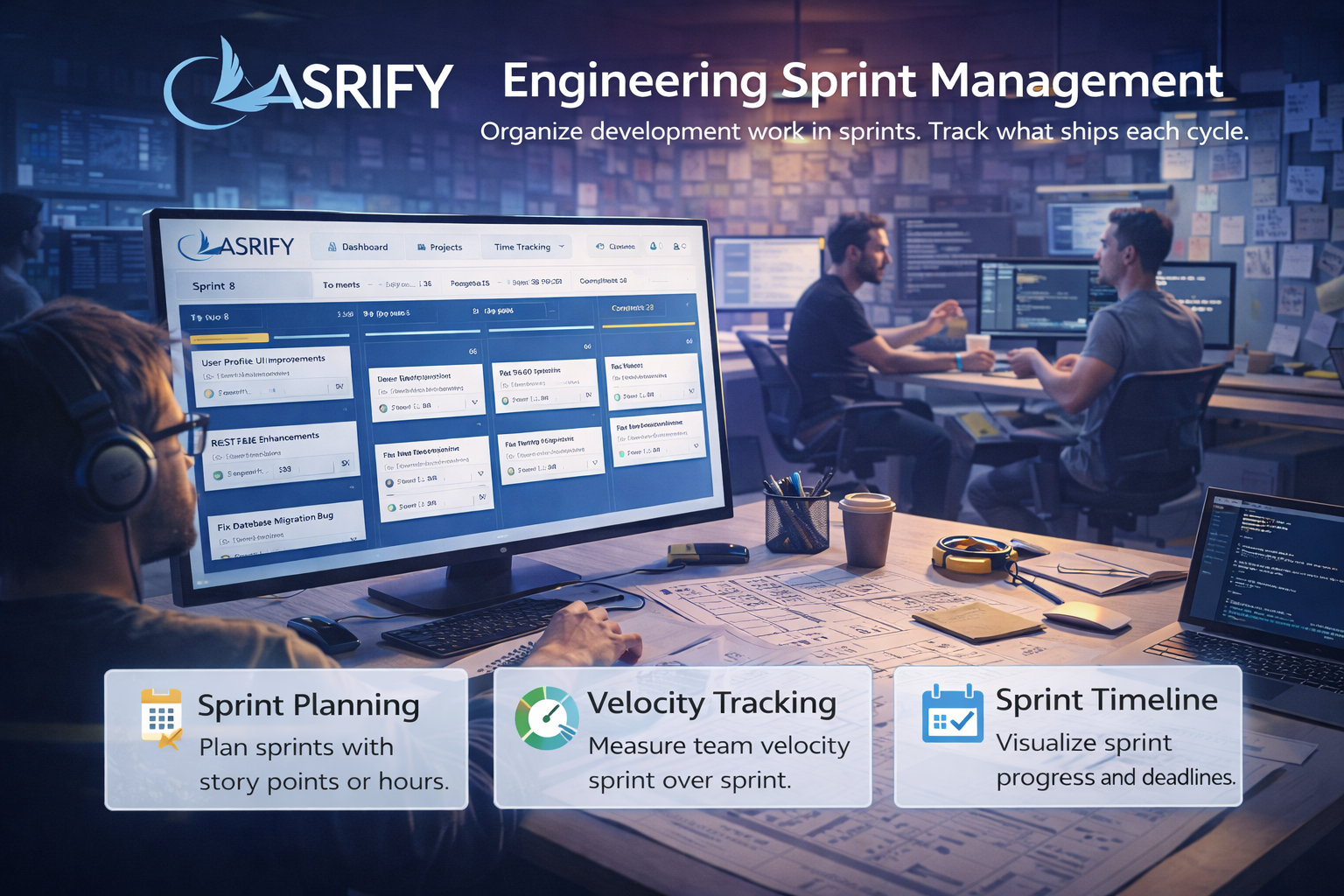
Engineering Sprint Management
Organize development work in sprints. Track what ships each cycle.
- Sprint Planning - Plan sprints with story points or hours.
- Velocity Tracking - Measure team velocity sprint over sprint.
- Sprint Timeline - Visualize sprint progress and deadlines.
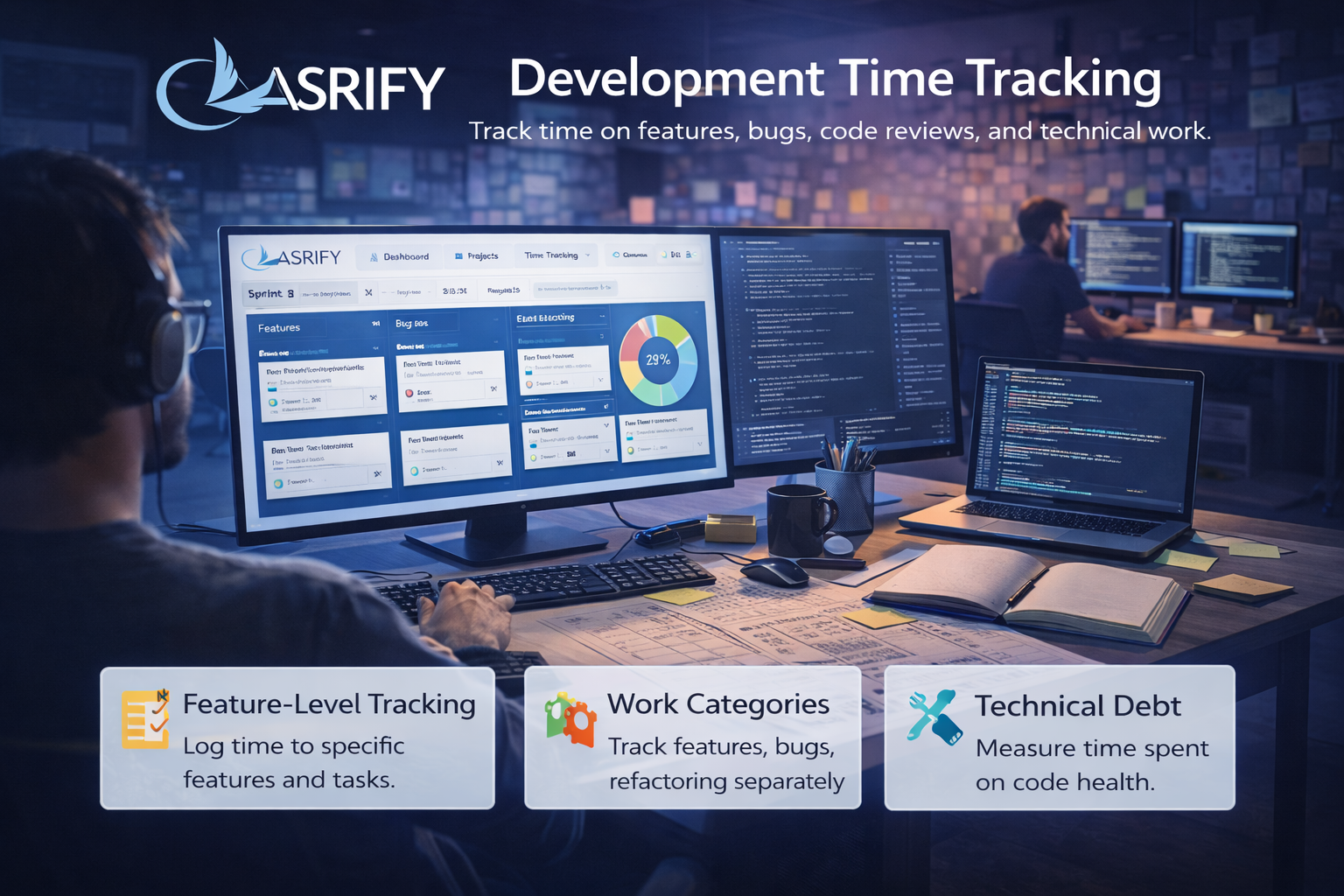
Development Time Tracking
Track time on features, bugs, code reviews, and technical work.
- Feature-Level Tracking - Log time to specific features and tasks.
- Work Categories - Track features, bugs, refactoring separately.
- Technical Debt - Measure time spent on code health.
Engineering Team Productivity
Software development teams face constant pressure to deliver more features faster while maintaining code quality. The tension between speed and quality shapes every technical decision, from architecture choices to testing strategies. Teams that invest in the right foundations—automated testing, continuous integration, clean code practices—ultimately move faster than those who cut corners to meet short-term deadlines.
Engineering time is a finite resource that must be allocated thoughtfully. Every organization has more features it wants to build than capacity to build them. Understanding where engineering time actually goes—new features versus maintenance versus meetings—is essential for making informed prioritization decisions. Teams that track time discover that perceived allocation often differs significantly from reality.
Technical debt accumulates silently until it becomes an emergency. Code written under deadline pressure, systems designed before requirements were fully understood, and dependencies that fell out of maintenance all contribute to a growing tax on development velocity. Tracking time spent on technical debt work helps engineering leaders make the case for allocating capacity to code health.
Team topology significantly impacts productivity. How engineers are organized—by feature, by layer, by product area—determines how much coordination overhead each feature requires. Teams that own complete slices of functionality can move faster than those that must coordinate across organizational boundaries for every change. Understanding time spent on coordination versus actual development reveals whether organizational structure is helping or hindering delivery.
We finally have accurate data on our sprint velocity. No more guessing when features will ship.