
Real-World Scenarios
See how teams in your industry use Asrify to solve common challenges.
Managing a Custom Software Build
A client needs a custom web application. The project spans 4 months with changing requirements. Tracking hours and managing scope is difficult.
Create a project in Asrify with milestones for each phase. Break work into sprint-sized chunks, assign to developers, and track time against each task.
The team delivers on schedule. Time tracking data shows exactly how long each feature took, informing future estimates.
Balancing Multiple Client Engagements
Your agency has 5 active client projects. Developers split time between clients, making it hard to track who worked on what.
Each client gets a project in Asrify. Developers track time against the project they are working on. Managers see time distribution across clients.
Accurate billing for each client. Clear visibility into team allocation and project health.
Kanban for Development
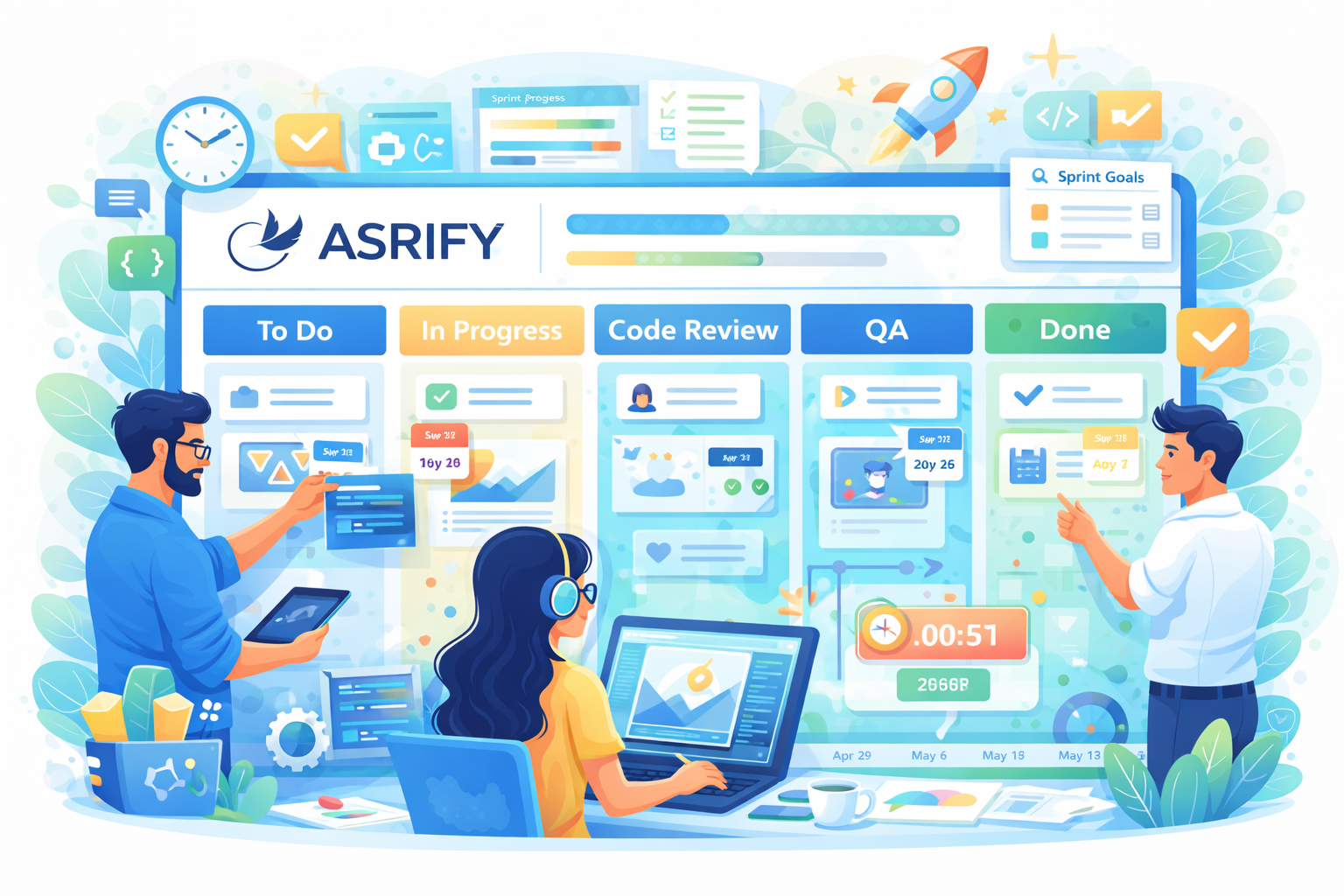
Visualize your sprint with drag-and-drop boards. Move tickets from Backlog to Done.
- Sprint Columns - To Do, In Progress, Code Review, QA, Done.
- Team Assignment - See who is working on what at a glance.
- Sprint Goals - Set milestones and track progress toward sprint goals.
Developer Time Tracking
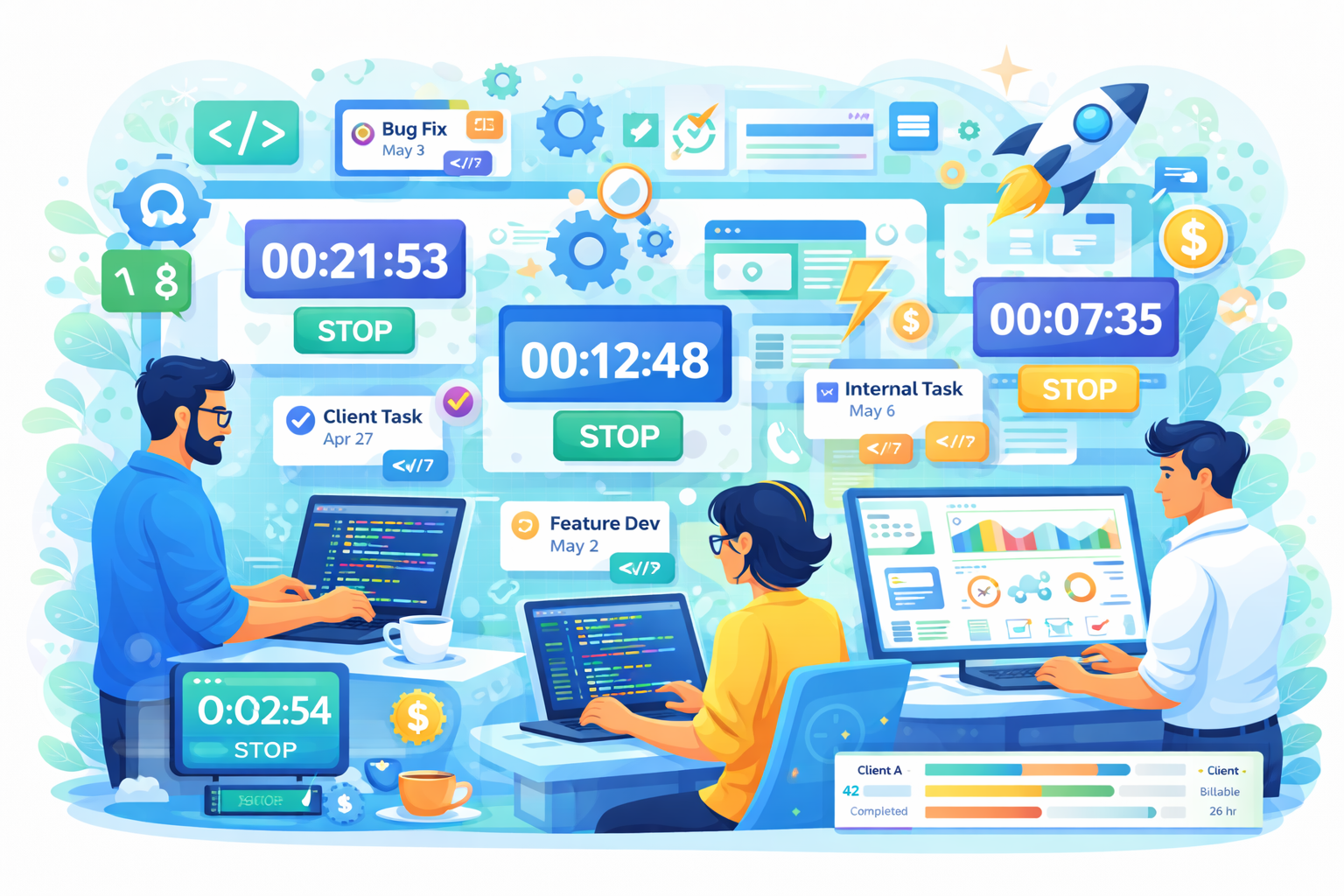
Track coding time without interrupting flow. Start a timer, code, stop when done.
- Task-Level Tracking - Log time directly from tickets.
- Billable vs. Internal - Separate client work from internal projects.
- Velocity Reports - See completed work by sprint or time period.
How Development Agencies Operate
Development agencies sit at the intersection of technical complexity and client expectations. Unlike internal engineering teams that can iterate indefinitely, agencies work within fixed budgets and timelines while building on technologies their clients may not fully understand. This creates a coordination challenge that goes beyond project management—agencies must translate technical decisions into business terms.
Estimation accuracy separates thriving dev agencies from struggling ones. Experienced teams know that the initial spec rarely survives contact with reality. Hidden complexity emerges during development, requirements shift as stakeholders see working software, and technical debt from previous decisions compounds over time. Tracking actual time against estimates on each project builds the historical data needed to quote more accurately.
The choice between hourly billing and fixed-price projects shapes how agencies operate. Hourly work provides transparency but requires meticulous time tracking that clients can audit. Fixed-price projects offer predictable revenue but demand accurate scoping and careful change management. Many agencies use a hybrid approach, with fixed prices for well-defined phases and hourly rates for discovery and ongoing support.
Developer productivity varies dramatically based on context switching and interruption patterns. A developer pulled between three client projects loses far more than a third of their time on each—the mental overhead of switching contexts eats into focus time. Agencies that protect deep work blocks and schedule meetings strategically get significantly more output from the same team size.
Asrify made our agency operations so much clearer. We finally know where all the hours go.